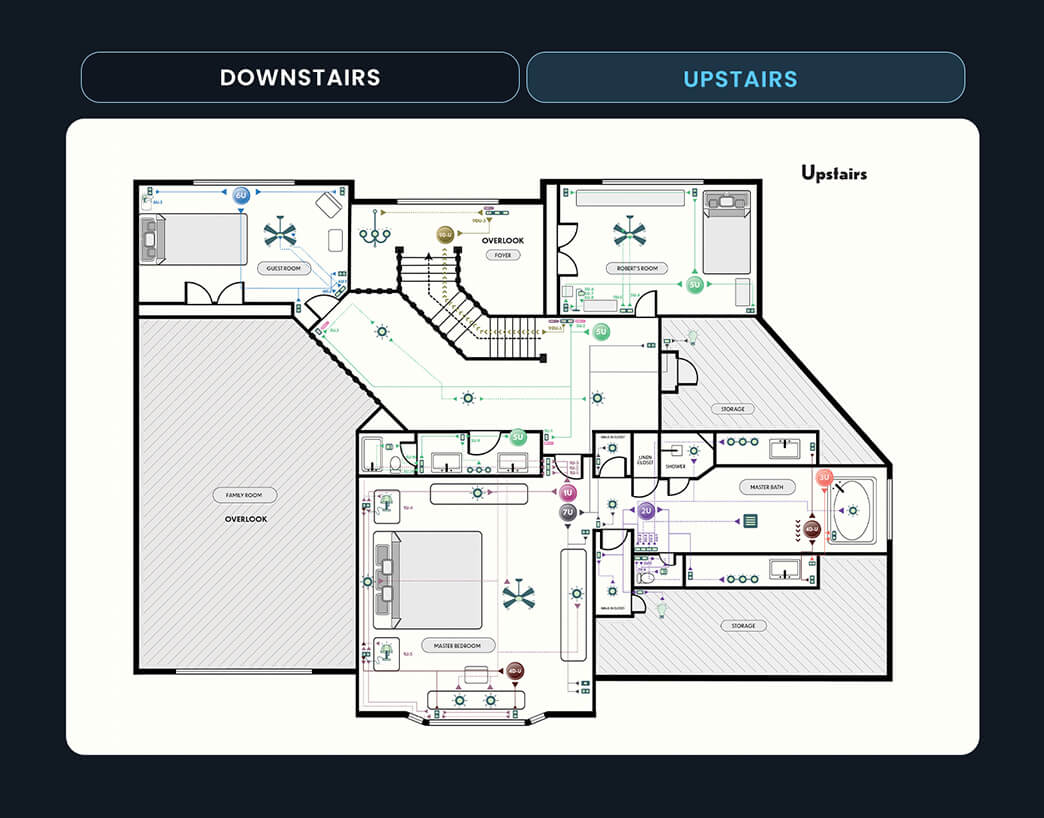
Home Infrastructure Mapping System

Systems Design & Infrastructure Mapping

A structured, system-level approach to mapping electrical infrastructure – connecting physical devices, circuit relationships, and smart components into a unified, navigable interface that improves clarity, safety, and control.

Mapping

Interactive mapping of outlets, switches, and appliances

Relationships

Breaker-to-device relationship tracking

Labeling

Structured labeling across physical and digital systems

Integration

Smart device integration with device-level metadata

Project Overview

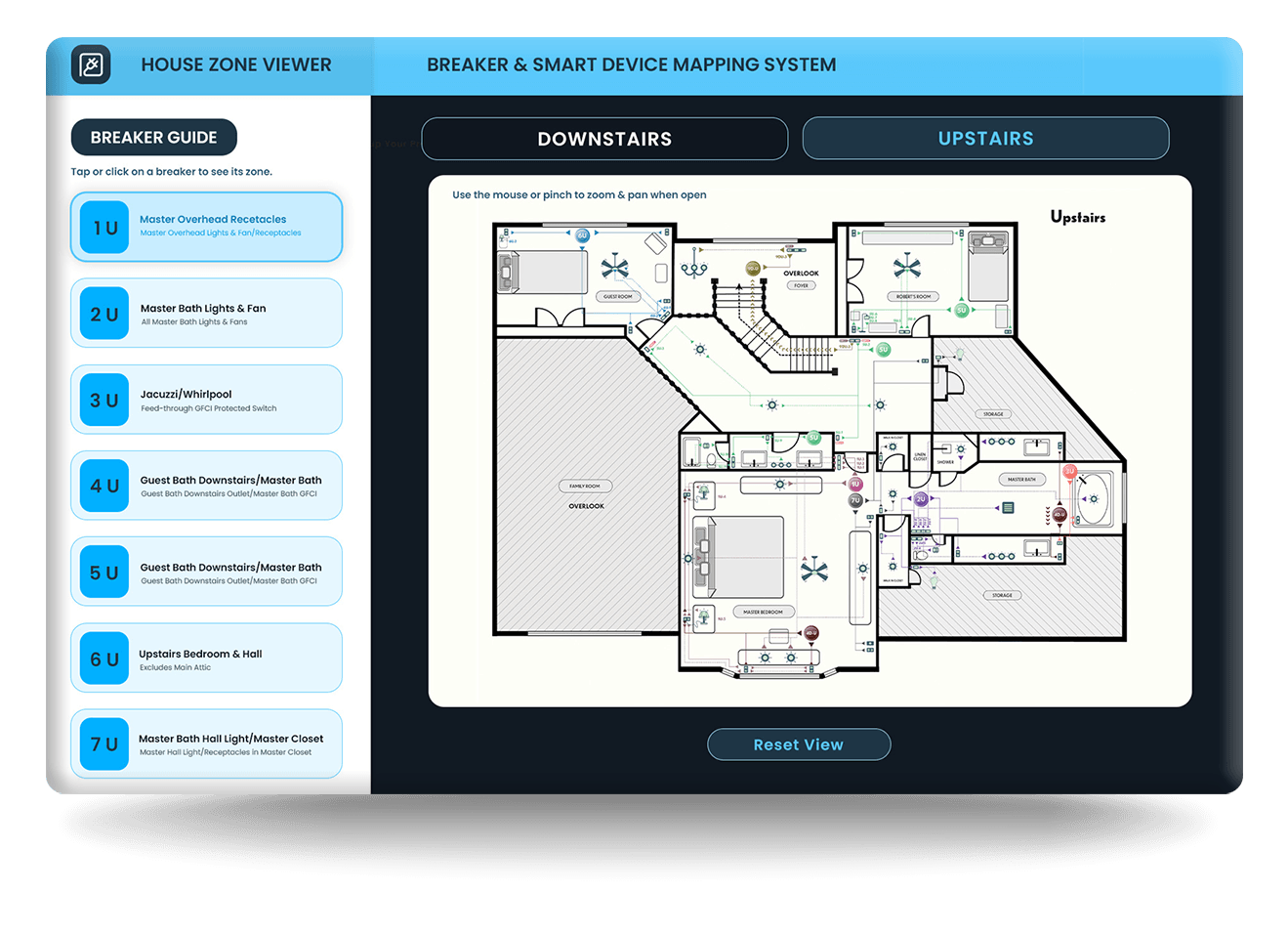
This project focuses on translating a complex physical system into a structured digital interface. It organizes electrical infrastructure—including outlets, switches, appliances, and smart devices—into a clear, navigable system that reflects real-world relationships.

By combining circuit mapping, device classification, and smart device data into a single interface, the system provides a reliable way to understand, navigate, and manage electrical layouts in a practical, real-world context.

Problem / Context

While upgrading light switches and electrical outlets, I encountered significant challenges navigating the home’s electrical system. The breaker panel labeling was faded and unreliable, requiring repeated manual testing to accurately identify which circuits controlled specific devices.

As I worked through the system, several recurring issues became clear:

Mixed Circuit Configurations

Multiple switches within the same wall box were often connected to different breakers, particularly in 3-way and 4-way configurations.

Non-Intuitive Circuit Layouts

Some outlets and switches were wired across non-intuitive locations, including connections between upstairs and downstairs circuits.

Partial Circuit Shutdown Risk

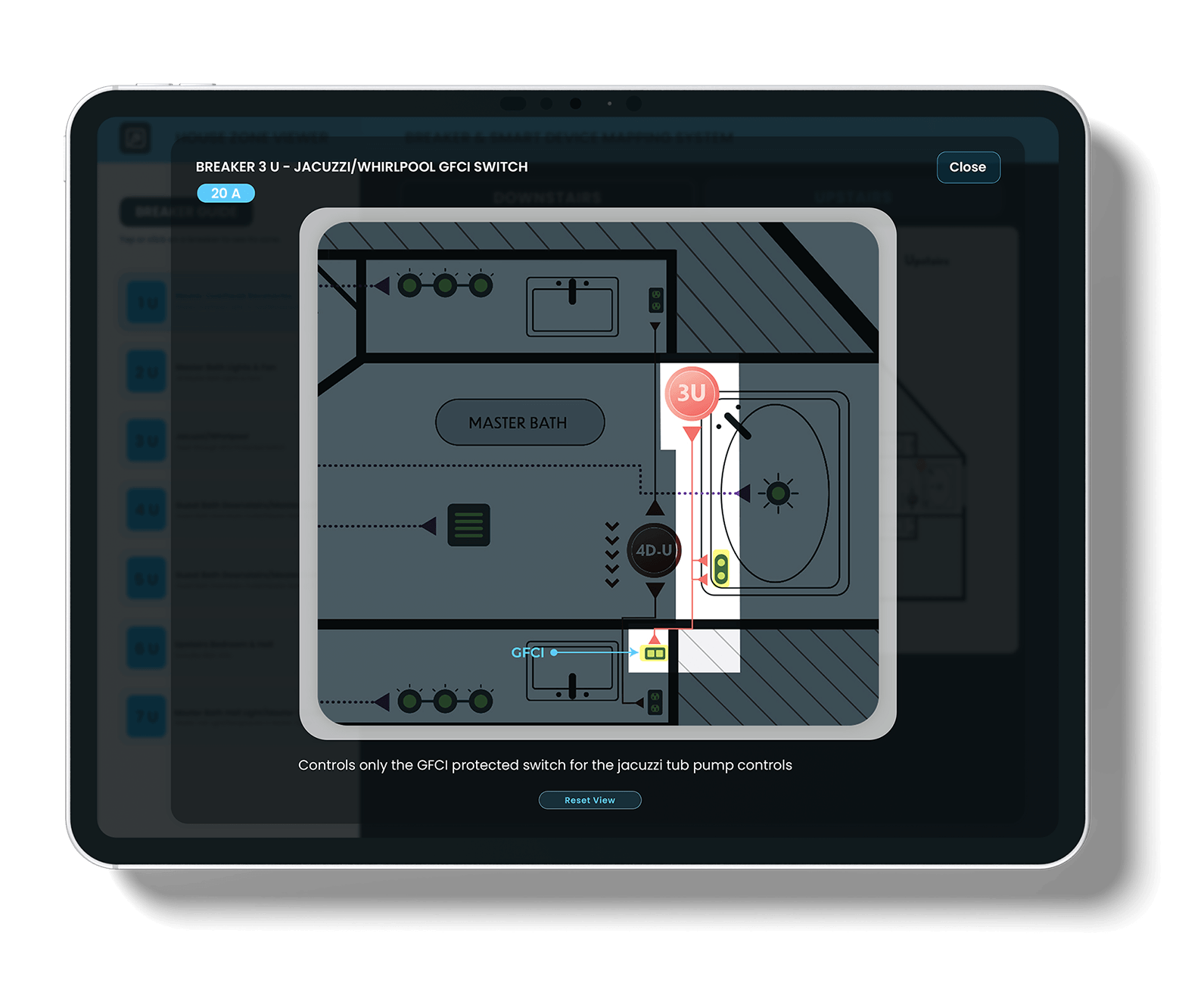
Partial shutoffs created safety risks, where some wires remained live even after a breaker was turned off.

Smart Device Tracking Complexity

Smart switches introduced additional complexity, requiring tracking of device-specific identifiers such as Matter codes and MAC addresses

Solution

I designed and developed a structured mapping system that connects physical electrical infrastructure with its corresponding digital representation.

The application organizes outlets, switches, appliances, and smart devices into clearly defined zones, mapping each component to its associated breaker and device-level data. By translating physical relationships into a structured interface, the system provides a reliable way to navigate and understand the electrical layout.

The solution integrates multiple layers of information—including circuit mapping, device classification, and smart device metadata—into a single, cohesive system designed for clarity, accessibility, and real-world use.

Navigation

Zone-based navigation for simplified system access

Details

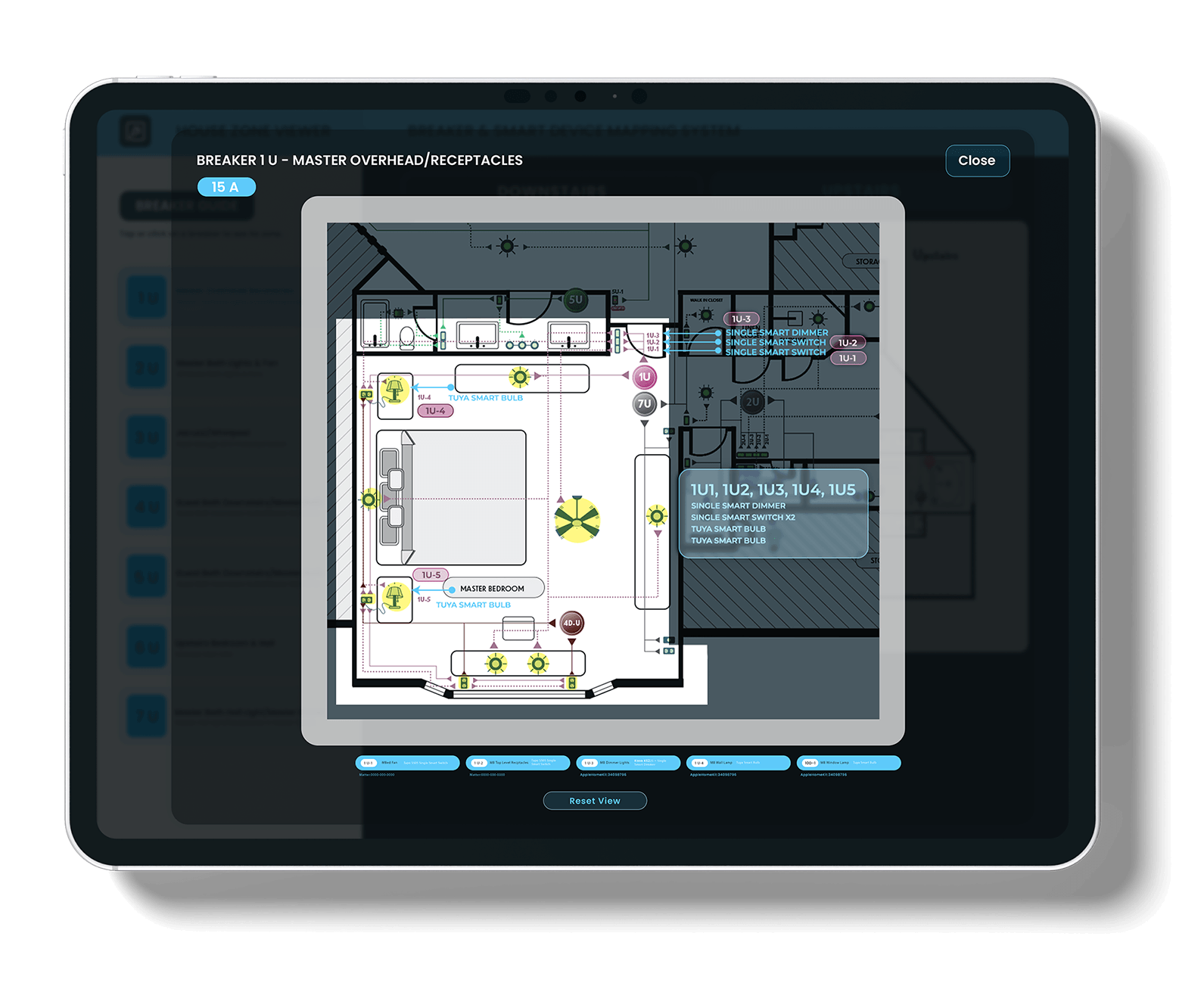
Detail views for individual components and circuit relationships

Organization

Structured grouping of devices and systems into clear, manageable zones

Accessibility

Designed for quick lookup and real-time usability across devices

Technical Approach

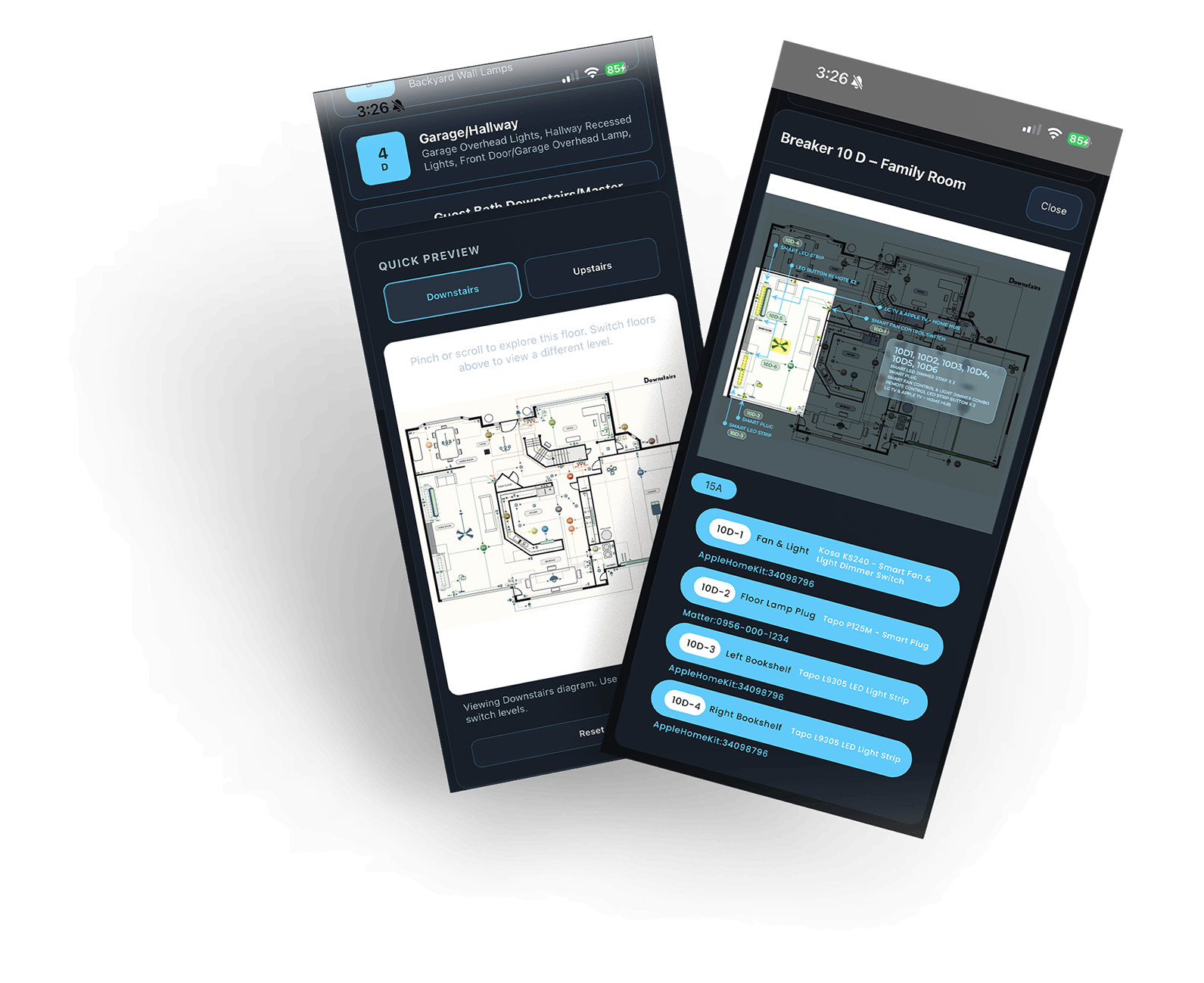
The system was developed as a Progressive Web Application (PWA) to ensure accessibility across devices. 

A structured data model was designed to define relationships between devices, zones, breaker circuits, and smart device data, enabling clear mapping and efficient organization. The interface was built with a focus on clarity and quick lookup, supporting real-time usability. The overall architecture was designed to be scalable, allowing for ongoing refinement and system expansion.

How it works

Zone Based Organization

The home is divided into structured zone groupings (e.g., upstairs/downstairs) to simplify navigation and system understanding.
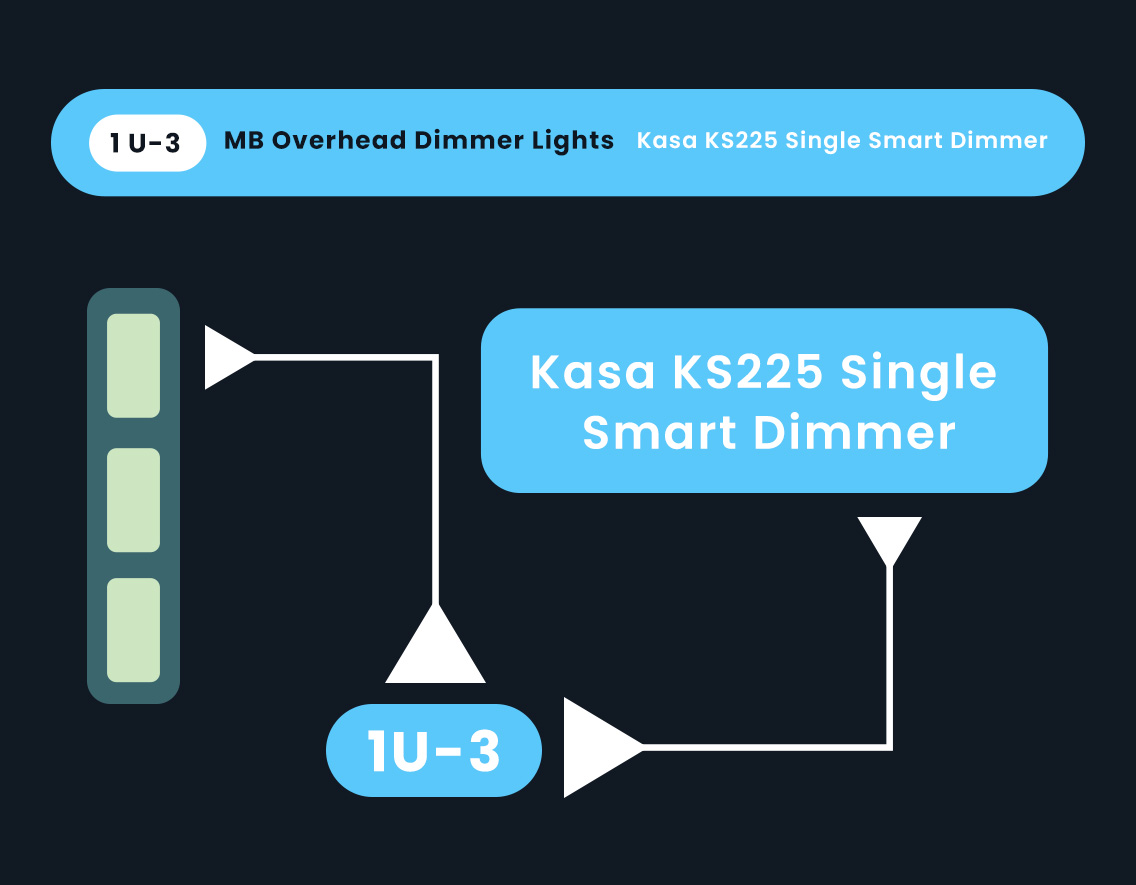
Device Classification

Each outlet, switch, or appliance is categorized by type (single-pole, 3-way, 4-way, smart) to define its role within the system.
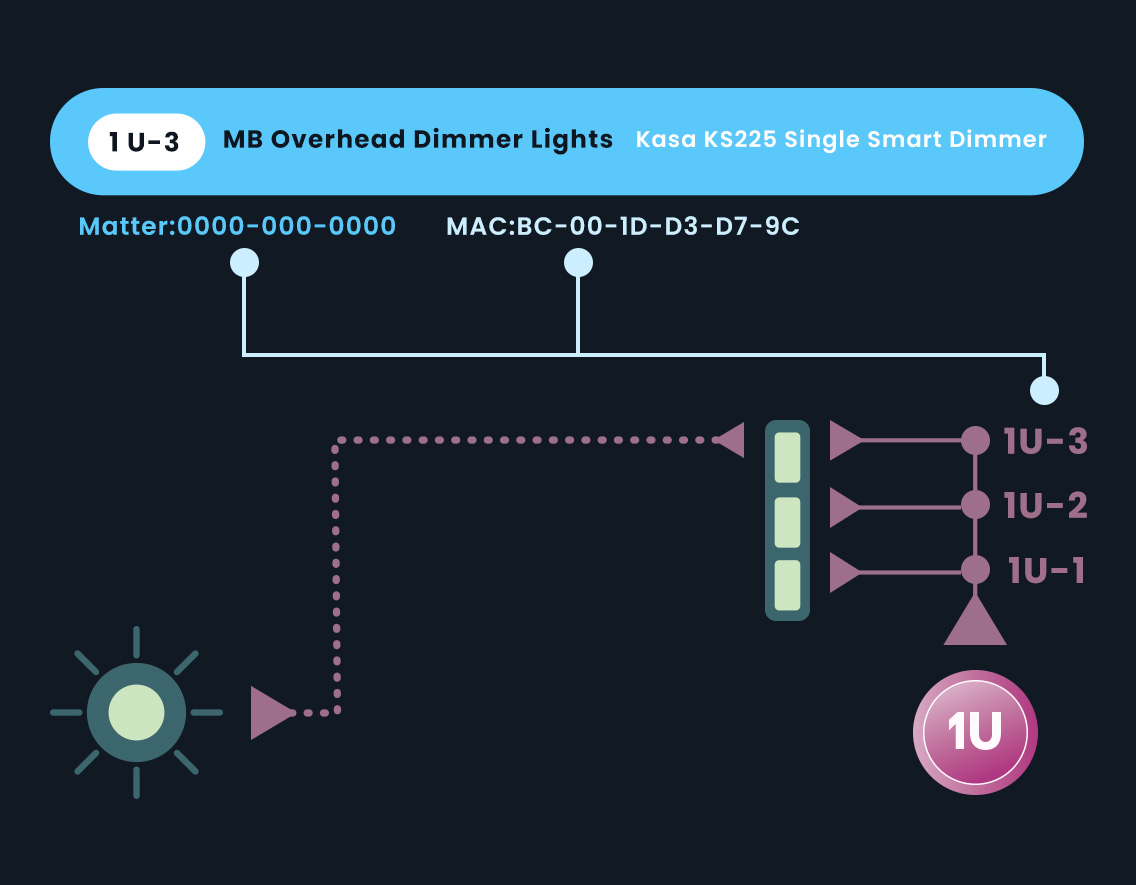
Circuit Mapping

All devices are mapped to their corresponding breaker, establishing clear relationships between physical components and electrical circuits.
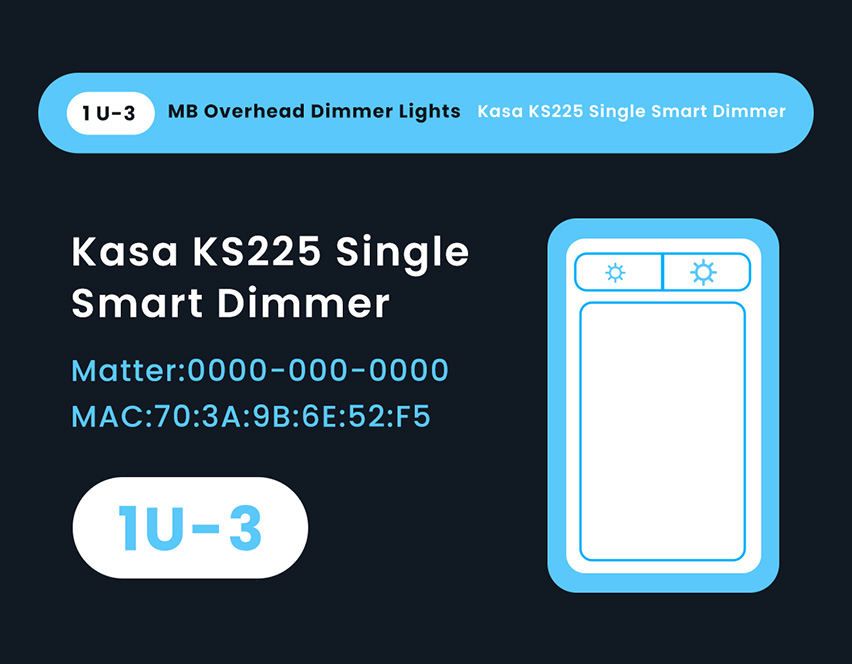
Smart Device Integration

Smart-enabled devices include structured metadata such as device type, MAC address, and Matter identifiers for accurate tracking and control.
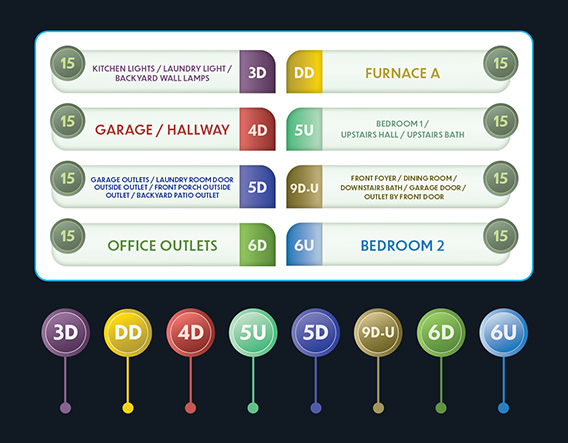
Synchronized Labeling

Breaker panel zones are labeled and aligned with the digital system to maintain consistency between physical and interface-based navigation.
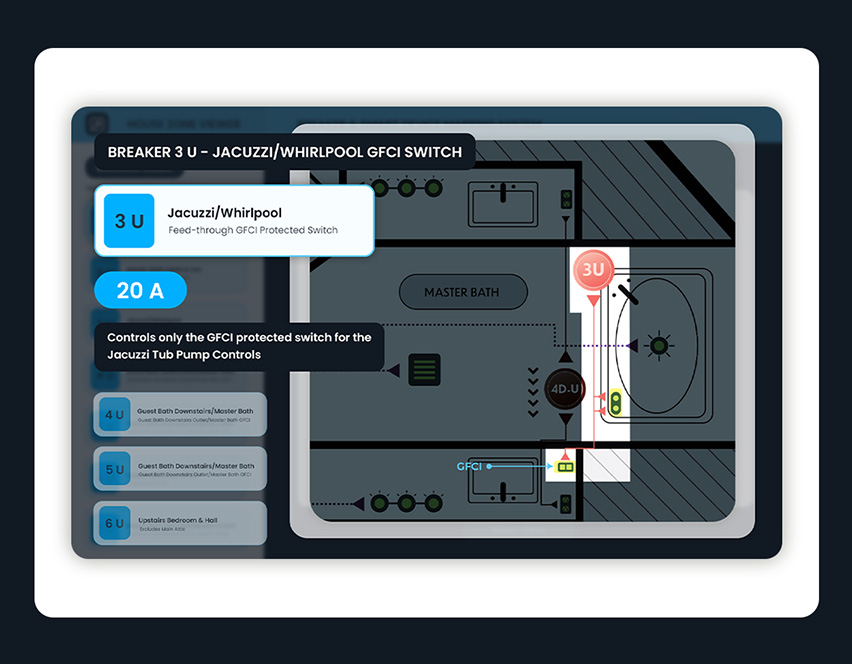
Interactive Navigation

Users can switch between zones, view associated devices, and select individual components to access detailed system information.

Challenges & Decisions

A key challenge was translating a physical electrical system into a logical digital structure while preserving accuracy and usability. This required designing a labeling system that remained consistent across both physical and digital environments. Additional considerations included balancing detailed technical information with a clean, user-friendly interface, and structuring data relationships in a way that supports both clarity and precision.

Impact & Value

The system provides a clear and accessible representation of a complex electrical layout, improving the ability to safely identify and manage circuit relationships. It reduces reliance on manual testing and inconsistent labeling, while establishing a structured framework for organizing both physical infrastructure and smart device systems. Overall, it enhances system visibility, usability, and reliability.

EdgeZpace is my creative portfolio showcasing a collection of my design and art projects.

With a BFA in 2D Design specializing in printmaking, painting, and photography, I bring a thoughtful approach to every project. My work spans graphic and web design, custom pieces for print, and commissioned paintings. I’ve also exhibited and sold my artwork as an artist vendor, sharing my passion for visual storytelling across different mediums.

Along with website design for small businesses and individuals, I create custom logos, graphics, and photography to build a cohesive brand presence. I also design social media posts, marketing materials, and layouts for both digital and print. Beyond aesthetics, I focus on organization and structure, ensuring that information is easy to access and that designs remain visually balanced across all screen sizes.

Here, you’ll find a selection of my work—including paintings, graphic designs, social media content, and websites—each reflecting both my creative vision and attention to detail.

EdgeZpace